Novel Promised Book Cover
About Birthmarked: "This science fiction adventure is a brisk and sometimes provocative read, thanks to solid pacing, a resourceful heroine, and a few surprise twists."

--Publishers Weekly

FBsquareTwitterSquareFBsquare

Posts Tagged ‘school’

Stealth Reading in School

Ms. O'Brien, Room 204

One of my favorite things about teaching was Independent Reading.  No matter what grade I was teaching, or which level, whether it was regular English or Creative Writing or Intro to Journalism and Broadcasting, we would stop for half an hour every Friday to read in silence. The students would bring books of their own choice and we’d just kick back. The only thing you’d hear was pages turning.  Sometimes we’d get to the end of our thirty minutes and take a vote to see if we should keep reading for another ten.  Sometimes, after that, we’d take another vote.

Please don’t tell me that teenagers don’t like to read.  They might not like to read what’s required, but whose fault is that?

I taught one “Standard” level 9th grade English class with 12 boys and 2 girls.  Some of the kids had never finished reading a book in their entire lives.  We decided to do an experiment and read for half an hour every day for four weeks, just independent reading of books the students chose themselves: Crash, Twilight, Scar Tissue, Bleachers, Flipped, Calvin and Hobbes, Eragon, you name it.  At the end of four weeks, most of the kids were reading with a fluency and comprehension they’d never had before.  Some liked reading and felt successful at it for the first time ever, at age 14.  I can’t remember what I skipped in the curriculum to make it happen, but was it worth it? I’d say so.  Wouldn’t it be nice if we let teachers let students have what they really need?  They’ll suck in what they want to learn like Slurpees up big straws.

Today on the Promised Blog Tour, Emily at The Ninja Librarian asks me how my teaching influenced my writing, and whether I thought of my novels for “reading across the curriculum” when I was writing them.  I’ll tell you now, I learned far more as a teacher than I ever  taught.

How to be Popular

One of the popular kids invited me to a summer afternoon party at a country club, and despite misgivings, I decided to go.  My mom took me shopping on purpose to find an outfit: pale green shorts and a patterned top that matched.  This was her idea of what counted for well-dressed and appropriate for the occasion, and I trusted her because A. I had zero fashion sense of my own, and B. I wanted to fit in.

My mom dropped me off outside the club.  Sounds of the party came from the terrace around the corner.  I remember the moment of walking up a grassy slope toward the popular kids and feeling uncertain in my clothes.  I remember wondering if I’d ever be popular and fearing that I wouldn’t know what to say or how to be funny.  I remember my optimistic hope that I just had to be myself and all would be fine.  I fooled myself that I wouldn’t care too much what they thought of me.

View from High Line Park, NYC. Fancy.

Here’s what I knew of popular kids: they had parties, nice clothes, careful hair, purses, dermatologists, and cars.  They drank, smoked weed, planned prom, ran the paper drive, and were elected class officers.  They dated each other and their families were members of the same club.  They were cheerleaders, football players, and tennis players.  The girls were usually nice if I was talking to them one at a time.  The popular boys didn’t talk to me unless I was with one of the girls.

Here’s a quick summary of my friends: they rode the city bus, played the violin, sang in the school musicals, threw pottery, liked math, took photos for the school paper, drew, played volleyball, fenced, and gardened.  They didn’t date.  They were nice in groups and even nicer one-on-one.  The girls had sleepovers where they baked cookies, ate bowls of M&M’s, and stayed up late watching black and white movies on TV.  What the boys did for fun is anybody’s guess.

In short, it was nice being with my own friends rather than in the popular crowd, but it was curious to watch them, like they were an alternate, fancy race growing up in a parallel universe side-by-side with mine, right in the same school hallways and cafeteria.

Since those days, my close friendships have grown more distant, and over the past couple of years, in the wake of a reunion, I’ve developed caring relationships with girls who once were popular.  I find myself wondering if the social pattern carried over to our later lives, or if there were deeper divisions of interests and values all along.  Were some of those popular girls naturally more comfortable in social situations, and thus better at orchestrating them?  Did those people skills carry over to their family lives and future jobs?  Were they safe from jealous insecurity, or were they ruled by it?

Here’s a highly simplified summary of where we went after high school, jobwise, which, of course, is hardly an indication of personal fulfillment, but it reflects, in a way, how we’ve contributed to the world.

The popular kids went on to careers in real estate, advertising, law, medicine, teaching, coaching, psychiatry, and the corporate world.  The kids who were my friends went on to careers in engineering, acting, writing, music, architecture, teaching, veterinary work, museum work, and government.

And me?  I don’t remember any other details from that country club party.  It has vanished, unremarkable, with a thousand other social situations I learned with practice to negotiate.  I’m glad I figured out early that I liked being valued by people who mattered to me, and I’m thankful that in my life today, the issue of popularity is moot.

Here’s what I think it takes to be popular:

1. Forget about being popular.

2. Be nice to everybody whether they’re popular or not.

3. Get involved with the clubs, sports, and activities that sincerely interest you, so you can hang with other people whose ideas excite you.

4. Brush your teeth regularly.

5. If you bring candy somewhere, bring extra to share.

6. Invite two or three friends over to play games.

7. Stay up late reading your favorite books.

8. Learn a foreign language.

9. Be nice to your parents.

10. Be nice to younger kids.

And that should do it.  You’ll be popular before you know it.  Popular with yourself for sure.

#1 You May Not Read A Book You Dislike

He'll read if he can pick his own book and have time for it in class.

I instituted Independent Reading in all of my high school English classes for a half hour every Friday.  The first semester, many of my students didn’t get it.  They thought it was time to sleep, pass notes, text, doodle on the desks, do homework, do their hair, or meet in the library to socialize.  My fellow teachers informed me they didn’t have such time to spare in their classrooms, so I understood they were suspicious of my new-teacher methods.  I looked lazy.  I was gently requested to produce research to back up that independent reading increased test scores, and when I started looking, I became even more convinced that my gut instinct was dead on: kids who read more score better, and the surest way to get teens to read more is to let them choose what they’re reading.  Supporting reading with actual time in the classroom was valid pedagogy.

So why wasn’t it working in my classroom?

My students were accustomed to a climate of accountability rather than independence, for one thing, but I thought I had that covered.  I had Lit Letter and Book Talk assignments spaced throughout the semester, weekly charts for them to record their total hours read, and another chart for them to keep track of and rate the books they’d read and abandoned. I’d studied my Nancy Atwell.  I discovered my students responded well to clear expectations, so I created an assessment for in-class reading on Fridays (see below).  Altogether, it still felt like an unsuccessful, task-minded game I was losing.

Students' Favorite Books

I persevered.  It makes sense that as I improved with all my teaching, I also became better at running Independent Reading.  With better classroom management, I became quicker at redirecting off-task behavior, as in noticing a student as soon as she wasn’t reading and pointing politely to my own book. I also built up my in-class library, propping popular books on whiteboard trays, shelves and windowsills.  I made a point of talking about Independent Reading on the first day of class, and at Open House night when parents came.  I went to the school library with my students during the first week of the semester to let them roam and help them pick out books.  We created lists of “If you like this book, try this one,” and we generated book wish lists from browsing Amazon.  I invited the school librarian to read to my students and talk up the newest popular books.  I invited the public library librarian to come and she issued library cards to my students.  I reserved the big blue chairs in the library for us to visit as an entire class occasionally.   One of my teacher friends started independent reading in her class, and then another teacher started, too.  It became a stealth race to see who would sign up to reserve the big blue chairs first.

Honestly, it took a few semesters for independent reading to take off, but then it really did.  It became the  norm in other English classes, too, so students were used to the routine year after year.  On Fridays, my students came to class prepared with books.  We would sit in utter silence for 30 minutes, companionably reading together, all 29 of us.  If I tried to short-change the half hour for some other urgent teaching business or an all-school assembly, my students openly protested.  We sometimes voted to extend reading another 10 minutes.  The related assignments, like Lit Letters and Book Talks, when each student presented a recent read in a 2-3 minute speech at the podium, became pertinent and inspiring.  My students swapped books with each other, squealed about books together, and spontaneously started reading whenever they ended any other learning activity early because that’s what they wanted to do.  In short, it worked.

I didn’t need any test scores to tell me: my students were readers.


In-Class Reading Assessment

Advanced Kids

When I was in sixth grade, the Visitation nuns sent me to seventh grade Literature, which meant I had to go up the stairs to the junior high hallway and sit with older girls who didn’t like me much.  I was scared of them and intimidated by the teacher, so I picked one of the desks closest to the wall, kept my knees together and my feet under my chair, and didn’t say much. We read David Copperfield, Treasure Island, Evangeline, Uncle Tom’s Cabin, Wuthering Heights, and Jane Eyre that year.  The teacher handed out a dozen questions for each chapter of assigned reading and collected the answers the next day.  Every day.

I thought that’s what Literature class was and I liked the stories, so I read everything, answered all the homework questions, and prayed the teacher wouldn’t call on me.  It didn’t occur to me until years later that those books were a bit advanced for a twelve-year-old.  When I was twelve, I didn’t question much.  I did what I was told.  None of us had any idea then that reading would become central to my life, or that I would turn out to be a writer, a writer who writes for age 12+, no less.

For many, many reasons, I can’t imagine putting a sixth grader today through what I experienced in the 1970’s, but I’m intensely grateful someone had the savvy to recognize that I was a kid who needed a challenge and advance me in whatever way was available.

I am not advocating for a throwback to out-dated reading lists.

Instead, we need to support and expand our enrichment programs in elementary and middle schools.  The weird, quiet kids with unusual strengths who don’t dream of advocating for themselves need to be nurtured just as much as the kids who are trailing behind, endanger schools’ test score rankings.  For lack of a better word, “advanced” kids deserve to live up to their potential, too, and we, as a society, need for them to thrive.

Some other stories I liked as a kid outside of school:

Captain Blood
A Girl of the Limberlost
The Princess and the Goblin
Anne of Green Gables
The Call of the Wild
The Phantom Tollbooth
A Sword in the Stone
A Little Princess

How to Raise Reading and Writing Test Scores

As an English teacher who has recently resigned, I’m no expert, but here’s my plan to raise reading and writing tests scores in middle school and high school.

1. Do not require English teachers to attend any seminars, presentations, or meetings on how to increase reading and writing test scores.

2. Do not put the poor readers and writers all together in the same class.

3. Do not require English teachers to write reflections in which they analyze students’ scores on 45-minute writing assessments taken at the beginning, middle, and end of the semester and explain what they did to affect those scores.

American Lit Grading, One Section

4. Do not require English teachers to write the objective of the day’s lesson on the board before each class.

5. Do not, on the first professional development day after summer vacation, when the teachers are well rested, inspired and excited, have the superintendent present the district’s test scores from the previous year along with scores of other districts that did better.

6. Do not make students take practice tests.

7. Do not purchase an “artificial intelligence” computer service for students which provides writing prompts, gives students a score for their grammar, spelling, and punctuation, alerts you if they use the word “suicide” in their writing, and makes the average score of your students’ work available to administration to compare with other classes.

8.  Do not, each year, require English teachers to write new curriculum, or new common final exams, or new rubrics for alternative assignments for students who do not meet goal on their standardized tests yet need to meet graduation requirements.

9.  Do not make teachers look up the previous test scores of their current students to look for a pattern of which state curriculum standards the students did not master.

10. Cap English classes at twenty.

11. Establish independent reading for half an hour every Friday, with no assessments connected.

12.  Have an online page for the school library where students can post reviews of their favorite books and comment on one another’s reviews.

13.  Put big comfy chairs in the school library and make sure the library isn’t closed a block of each day because of a staff shortage.

14. Let the students pick at least one of the books the class will study as a whole group by discussing length, subject matter, age and gender of the protagonist, covers, or anything else they think matters.

15. Let students choose their own writing topics and genres to express their ideas.

16. Allow students to have water bottles in class and to leave for the bathroom when they need to go.

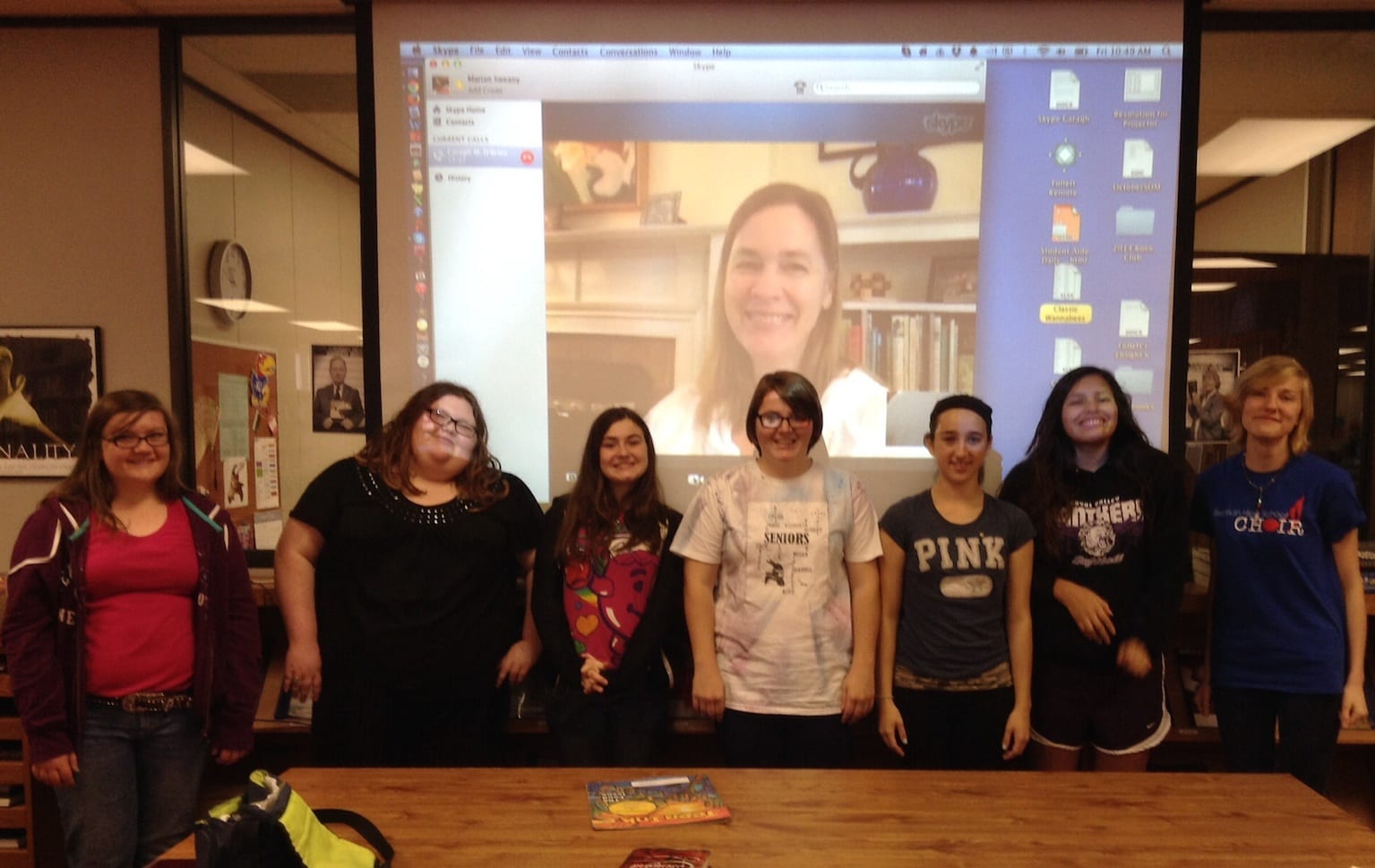
17. Invite journalists, novelists, screenplay writers, poets, public library librarians, human rights activists, artists, and storytellers to visit classes and compensate them for their time.

18. Eliminate standardized tests altogether.

Results:

With the enormous amount of time saved, teachers and students will be able to concentrate on true learning.  Morale will sky-rocket.  The test generating and scoring companies will go out of business.  Vast amounts of money will be saved.  Best of all, we will reclaim the dignity and enthusiasm that are the rights of every student and teacher.

Audio Books
The audio books of BIRTHMARKED, PRIZED, and PROMISED have been released by Tantor Audio. They're available through Tantor, Barnes & Noble, Amazon, and Audible.com
Blogger Roadsign