Archive for March 2012
Afraid to See The Hunger Games
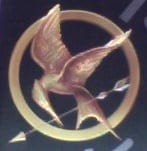
I know I’m going to see it. Probably this weekend. But I’m afraid. The book disturbed me so much when I first read it that I’m reluctant to put myself through that again. That’s the main reason why I’m afraid to go: true pure cowardice.
The second reason is my fear of erasure. When I see a film version of a book I love, it superimposes images over the powerful, individual ones I have imagined, and they are erased forever. I can’t find my own vision of Hermione’s face or wild, bushy hair anymore. Wilbur and Charlotte no longer have their own, true plaintive and soothing voices. Edward Cullen, alas, is nothing like my own mesmerizing, smooth-voiced, vulnerable Edward Cullen anymore. I know the exchange can be worth it, as in the case of the dining hall at Hogwarts, which is even more magical in the film than it was in my mind, but even there, I’ve surrendered my own imagination to the common, shared vision of every other movie-goer.
I see Katniss as a skinny, scrappy, dirt-covered kid with a Southern accent. Her attitude is in her stance, and in the inner workings of her mind with all those quick-thinking fragments and decisions. I lived her perspective through the first-person narrative of the novel, and I still feel her loneliness and determination, her love for Prim and Rue. Suzanne wrote the book, but once I read it, Katniss and Peeta became mine, in the way only I absorb book characters. I can’t easily give them up in exchange for the Hollywood versions. So far, I’ve avoided watching any trailers, except for one that came up on TV during Modern Family last night, which both fascinated me and made me cringe. So far, the book experience is still pure. Mine.
So why will I go to the film? Curiosity will take me, plus trust that I’ll be truly entertained, and the little kid feeling of not wanting to be left behind. My son has seen it already, and my husband wants to go with me. I can’t choose to be blind to a major phenomenon that is reflecting and shaping my culture right now, either.
So I’ll go. Don’t mind me if I get a little moody and difficult in the aftermath.
Losing Tempers, Mine and Hers
I’m revising a scene today in which Gaia loses her temper. I don’t like losing my temper. It makes me unjust and unable to think clearly. I fight not to say hurtful things I’ll regret and yet I also want to be honest about my rage. In the moment, I want to lash out, and since only people I love have the ability to truly make me furious, they’re my targets.
Since I don’t like myself when I’m in a flare of anger, I don’t like Gaia that way, either. But you know what? I think it’s important to have a character who blows it sometimes, and not just with nice, tidy, honest mistakes that can be fixed later. She can make emotional mistakes, too, and feel icky and ashamed afterward. She can struggle with apology, with the strained distance that follows a fight, and with the ensuing loneliness that’s her own fault.
It’s risky having a beloved character demonstrate unadmirable qualities. You’re trusting that readers will understand her and forgive her, but they might be turned off instead, or think an outburst isn’t consistent with her character. It helps if her feelings are so recognizable that we can see ourselves in her, and understand why her circumstances would trigger an extreme reaction. There should be underlying pressures that combine with the immediate conflict in the dialogue to push her over the edge. She should think something ugly and unfair, even if she manages to curb it back somewhat when she speaks, so the reader can feel the war inside her. It’s safer if she loses her temper only about things that matter.
I know it’s fiction, but the feelings of writing are real, so writing about lost tempers is uncomfortable at best. I must say, it helps to know there’s a cookie in the kitchen and I can take a break before I move onto the next scene.
The Inchoate, Fragile, and Strange
Starting a new book is an exciting time of discovery, but also a solitary one, at least for me. I’ve had several kind friends ask me lately what I’m working on. It feels impolite to say I can’t really talk about it, like I’m holding out or I don’t trust them, but distrust is not why I don’t talk about my ideas.
The problem is that the ideas themselves are so fragile and shifting that by trying to summarize them into something coherent, I’m changing what they are. Whether I talk about a new favorite character, focus on the conflict, or describe the world, I’m picking out some ideas or threads over others, and it feels like I’m making a promise I can’t keep, either to my friend or to my story.
It’s like the Heisenberg uncertainty principle, where you can’t know the momentum and position of a particle at the same time, but this principle is for ideas. The measuring itself, or the talking, changes the outcome.
The few times I’ve tried to talk about early ideas, it has made the writing harder or slower. If I know a friend smiled or nodded at an idea, or seemed interested in another, or asked a question about another, then in the back of my mind, I’m already responding to that feedback, even if it wasn’t intended. It makes me doubt my ideas in reflection of another’s response, instead of purely on my own. I try to please them going forward, and that is limiting when I need to cast my net as wide as possible for all sorts of ideas.
I should add that my ideas are not merely bouncing around in my head, completely unformed. They’re on paper, pages and pages of them by now, simmering and percolating with wrong directions and half-starts. They’re taking on a shape I can’t yet see fully, and the process is an intriguing mix of “Aha!” and “What next?”
So, in case you ask me, that’s why I’m evasive. I don’t mean to be impolite. I’m just playing in the twilight alone.
Boys in Packs
A perk of writing from home is being here when my son comes home from half-days of school with his high school friends. I’m usually in the other room, out of the fray, but I like to pop into the kitchen to say “Hi!” It’s not a bad idea to know who is in my house.
I can’t help noticing certain things about teenage boys in packs:
They tend buy provisions on the way over in case the house is short on key foodstuffs: grape pop, root beer, ramen noodles and chips.
They eat before they do anything else.
They’re happy to share with me.
They have a special predilection for the orange-hued food group: Clementines, Mac ‘n’ Cheese, Bar-b-Cue chips, and Cheetos.
They’re friendly and polite.
They will rearrange furniture to clear space to play Risk on the floor, and then play for a very long time.
They like to pack into small rooms.
They’re loud.
They don’t mind closing the doors so their noise doesn’t distract me.
Some of them wear knit hats indoors on warm days.
They never wear coats.
They talk a lot, all at once.
Some of them have wild hair, and others sport different facial hair from week to week.
Their shoes are unbelievably large and they pile them in masses by the door.
They bring their own computers so they can all play computer games at once.
They sing.
They like a new Frisbee.
They like to play ping pong.
They leave the stove on after they make Mac ‘n’ Cheese.
They spontaneously clear their dishes.
They argue.
They have a private language of common, insular references and scatological humor.
They laugh a lot.
They leave things behind when they go: sweatshirts, phones, and sports bottles.
But I don’t mind.
I know they’ll be back.
Doubling Up

Novels on the Dock
I usually work on one book at a time, but now something else is happening and I feel like I’m cheating on myself. It’s the strangest thing. I recently started a novel I’ll call Rainy Roof, and it completely engrossed me. I loved the character and the weirdness of it, and it was challenging to write. My agent asked me for pages, so I sent him the opening chapters. Then, the anticipation that I’d get feedback soon made me pause, and into that pause leaped an idea for another novel.
An irresistible idea. What the heck? I started that, too. This book, which I’ll call Big Steps, is completely unlike anything I’ve ever written. I’m way out of my usual territory, and it’s really fun. I adore this character and her school world feels incredibly real, so I’ve sunk a week into it, blissfully.
Now I’m torn. I ought to be working on Rainy Roof. It’s further along and it makes better sense as a follow-up to the Birthmarked trilogy. A responsible writer, the type I used to be, would knuckle down and get that first draft done, but because the girl in Big Steps needs me so much, I want to ignore the responsible side of myself and help her. In fact, isn’t it most responsible to keep Rainy Roof on hold until I get my agent’s feedback?
Now here’s the real kicker. I keep my novels shrunk in my dock, and without looking too closely, I accidentally clicked open the file of Rainy Roof this morning and it took all of two sentences for me to be completely sucked into that book again.
As of this morning, the book I ought to be writing, Rainy Roof, is once again the book I want to be writing. The book I really shouldn’t be writing, Big Steps, is also the book I want to be writing.
I have two books I want to write. I’m writing them. I don’t know how yet, but I am.