Archive for August 2011
Powerless, Thanks to Irene
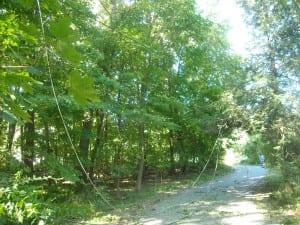
Wires Very Down
We’re among the 700,000+ in Connecticut who are without power since Irene hit, and I expect we’ll be this way for quite some time. Fortunately:
We’re all fine.
Our neighbors are all fine.
We were able to rig a siphon so the sump pump can drain down a pipe in the basement instead of overflowing.
We still have water.
The UConn Library is open so I can post this and spend the day with my computer plugged in so I can work.
I can probably take a shower later in my daughter’s dorm.
We were able to fill the drawers of the fridge with ice, making it an “ice box” and slow the spoiling of our food.
Nevertheless, it’s a little weird around here. I finally learned how to play Texas Hold ‘Em.
The Writer-Blogger Connection
A year and a half ago, people who wrote blogs about books seemed mysterious, organized, technologically savvy, funny, creative, opinionated, and distant to me. I was surprised and grateful when any of them reviewed my novel positively, and I learned quickly to stop reading when a review was meh because it stung. As a few bloggers began to contact me about interviews and as I emailed a handful to thank them for their kind words, I discovered some incredibly nice, generous people who love books as much as I do.
The good thing is, I feel like I have more nice friends. The bad thing is, their opinions matter more to me now that I know them, so part of me squirms knowing that my publicist has been sending out review copies of Prized. I hope the bloggers will remain as honest as they were the first time around. I also can’t help hoping they like my book. There’s the rub.
The writer-blogger connection makes me question whether a blogger can be impartial once he or she knows a little of the writer behind the book, and if that compromises reviews. Is it possible to say something nasty about a friend’s latest book? Ouch. Yet if nastiness isn’t possible, the positive comments aren’t credible anymore, either.
With hired reviewers selling fake reviews to the likes of TripAdvisors and Amazon at $5 to $10 a pop, I’m feeling shaken with new distrust. I want to be able to believe genuine people like me are sharing honest opinions, with nothing motivating us but goodwill and concern for our fellow consumers or readers. As a reader, I want the purity of the unbiased review.
I’ve read that a positive or a negative review in the New York Times can make a measurable short-term impact on a book’s sales, but beyond that, it’s hard to be convinced any single review has much influence. When bloggers reach 100-2,000 followers at a time, the power of bloggers lies in their collective ability to spread awareness and a general impression of a book. Even though one blogger alone in this buzz may have a very small voice, the integrity of all the bloggers, with the grass-roots, free-speech, devil-may-care honesty and humor that abound, is what we value.
That honesty is what I don’t want to undermine. So I’m adding my honesty, my own disclaimer, to the mix. It’s preposterous to think I would ever pay for a positive review. I’d never trade my friendship for a positive review, either. Yet at least a subtle influence seems unavoidable when there’s a writer-blogger connection. Over this past year, more than once, I’ve ended up having funny, friendly exchanges with bloggers behind the scenes. I’ve discovered several of them are writers, too, and they get what I’m going through while I’m working. We like each other. They matter to me. I’ve had kind, unexpected emails arrive just when I’m pulling out my hair with gnarly revisions, and these notes make me think There’s hope. All I can do is my best. I just have to keep trying.
My blogger friends make me a better writer. If our friendships also influence their reviews of my books, maybe it’s because we’re human. However, knowing that my friends are people I respect, I suspect I’m due to read some pretty honest reviews. I think that’s why I’m squirming.
Many thanks to my blogger friends, especially Steph of Steph Su Reads, Kari of A Good Addiction, Enna of Squeaky Books, Precious of Fragments of Life, Katie of Mundie Moms, Georgia of Eve’s Fan Garden, Rachael of The Book Muncher and most recently, Katie of Simply Kate, who shot this unbelievably sweet YouTube review. I’m delighted to count you my friends. You certainly don’t need me to tell you: go ahead and be honest.
The Publishing Dream and Reality
Dreams shift, fortunately. When I was teaching a segment on The Great Gatsby, I asked my students to write about their dreams and goals, and at the end of it, one of my students asked me what my dreams were. I’d written sincerely about how I hoped to become a better teacher, one who could inspire students and still be left with a sane life outside of school. It seemed like a worthy goal, a grounded one, but it had none of the soaring hopefulness I’d had as a teenager, and I knew my students looked at me like I’d lost something. I wasn’t as dreamless as pathetic, doomed George Wilson, but I certainly wasn’t Gatsby, either. No matter how corrupt ol’ Jay was, you have to admit he could dream big.
Several people have asked me if publishing Birthmarked was a dream come true, as if they expect me to be dizzyingly ecstatic about realizing ambitions I had decades ago. Conversely, I’m aware that several other writers have felt an unexpected, immobilizing disappointment after their books have been published. They crash when they discover publishing hasn’t lived up to their expectations. They dreamed of a new phase of glory, fame, wealth, and respect, or at least a promise of future publications. In either case, the assumption is that publication is a nearly unattainable dream, achieved only through heartfelt hope and striving, with the potential for bliss or disillusioned devastation in its wake.
Publishing my YA debut was not a dream come true for me. I’ve said before that I didn’t expect to sell my novel, so I also wasn’t caught up in fancy dreams about publishing it. I wasn’t motivated by such dreams. Instead, I wrote it while still aiming for my attainable goal of becoming a better teacher. I’d already achieved the dreams that have brought me the most happiness, namely marrying my true love and raising my children. I already had meaningful work with my teaching job, so I wasn’t depending on writing to expand and fill my life with joyful work. I’ve certainly never been interested in fame or the bother that must entail.
What, then, do dreams have to do with my writing? Do I not have any aspirations? Do I not even let myself dream for fear of failing?
What I have is reality, with all of its beauty and grit, all of its joy, work, and disappointment. When I get great writing news, I rejoice, knowing the glow won’t last. When I get bad writing news, I let myself feel horrible about it, knowing it will pass. I wake every morning with a sense of pleasure and purpose thinking, “Oh, good. I get to write today.” I have projects to work on: revising Book 3, checking copyedits of a story, writing this blog, brainstorming my next project proposal and guest blogs due in a few weeks. I have bills to pay, and laundry to fold, and groceries to buy. It’s raining a steady deluge outside my open window, and the immediate present is supremely alive to me.
I do have dreams for my future. I want more meaningful work, whether it’s teaching or writing. I want more dinners with my family. I want my country to find peace and renewed prosperity. I want more rainy summer days. I want to grow very, very old.
Prized Cover in the UK
The Amazon.co.uk site has uploaded the cover for Prized, which will be published by Simon & Schuster Children’s Books in the United Kingdom and Australia in November, just a couple days after it will be released in the U.S.
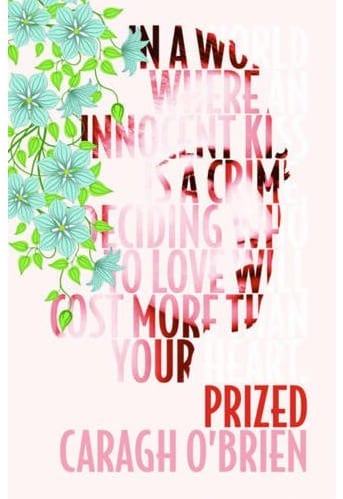
In case you can’t read the tag line, it says “In a world where an innocent kiss is a crime, deciding who to love will cost more than your heart.” Clever. I did not come up with that, incidentally.
Here are the two UK covers so far together:
The covers were designed by the inimitable Nick Stearn of London. Nice. I particularly like how there’s movement between the two covers as the face turns towards us. Makes me wonder what Book 3 will do.
Road Trip with Art
By the time my daughter and I became log-jammed in two hours of traffic south of D.C., we’d had a chance to visit the Hirshhorn Museum and we were still high on having our minds boggled. I was pondering the two great elephants in the gray room, and the way I was irresistibly drawn to walk between Gordon’s screens, uneasily safe while the beasts were captive, with their natural beauty trapped in a barren, dizzying world. I liked how Samaras’s book made of needles looked both soft and prickly, the way a real book can both lure me in and prove dangerous.

At the Hirshhorn
I liked how I would still be discovering new things about Jan Dibbets’s “The Shortest Day of the Year” much later when I was explaining for my sister the long installation of sequential photographs, each taken of the same window view six minutes apart. It’s about time, and light, and the spectator is part of the art because you have to move along it to experience it, so time and space are married there, pace after pace. It changes you. I love stuff like that.
On the road, I like how memories expand like fog within the car. I like eating cold red grapes while I drive, picking them from their stems by feel. When it’s my turn to be the passenger, I like how I can write on my computer, glance up, and see green trees whizzing by, mile after mile. There, too, time and miles add up to the same thing, like an old math problem come alive, like an art piece. I check the estimated arrival time on Garvin to see it adjust for every pit stop or slow toll when we’re accidentally not in the EZ-Pass lane. I like how it doesn’t really matter whether we’ll arrive at 9:07 or 11:02. The point is, we’ll arrive, and even better, along the road we’ve been happy. More than happy.
Q. Do You Ever Write on Paper?

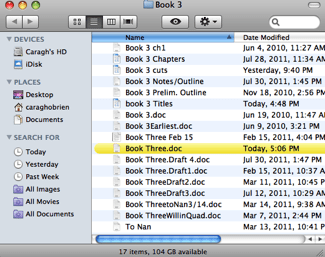
Computer Folder for Book 3
A. If I’m on a plane during take-off, in Starbucks expecting a friend, or in my car waiting for one of my kids, I write on paper. I keep a notebook in my purse for such occasions, though at times I’ve been reduced to using sticky notes. Normally, however, I do all my writing on my computer, including brainstorming, lists, notes, first drafts, and revisions. I have different documents for stages of a book that I keep in one folder, and I have several open at a time so I can work back and forth between them, like the latest draft doc and the “Cuts” doc.
The truth is, writing on the computer and on paper are two different processes. I can type faster than I can write by hand, which probably accounts for the biggest difference, and of course, revising is much easier on computer. That’s what I spend most of my time doing, so the flexibility there is key.
Yet even with first drafts, there’s a difference.

My Current Notebook
When I write entire scenes on paper, I notice the process involves a slower, more deliberate kind of thinking. “Deliberate” is not an especially good thing for first drafts, at least for me, but it can work. Pen on paper makes me more conscious of making raw progress and going forward because I’m filling up a page and flipping to the next, even though it feels slower and my thoughts sometimes have to wait for my hand to catch up. On paper, if I’m tempted to adjust a phrase mid-stream, it’s more awkward to back-track and cross out and go forward than it is on a computer, where I just delete back a couple words and go on again. So I’m more inclined to say it badly just so I advance to where my next idea already is. It is not wordsmithing, but then, it’s a first draft, so that’s okay.
My paper writing looks so exposed to me, so instinctive and stupid, if I may say so. I’d be afraid to let anyone read something I wrote on paper, like I already know it’s wrong, like I need to apologize for how shallow, disorganized, or misspelled it is. On my computer, I know my writing can change and become just what I want it to be before anyone can see it. It’s safer, I suppose, because computer writing has built in room to hide all the false starts.
So, I do write on paper, now and then, when it’s my only option. It certainly beats not writing at all. Later, I can type the draft into my computer where my ideas will feel fluid and alive again, the way they’re supposed to be.